One page for the day's blockchain news, read every hour from the outlets that report it and linked straight back to them. Nothing is picked or ranked by hand. Pieces I write are marked From the editor. One script, no backend, and it costs nothing to run.
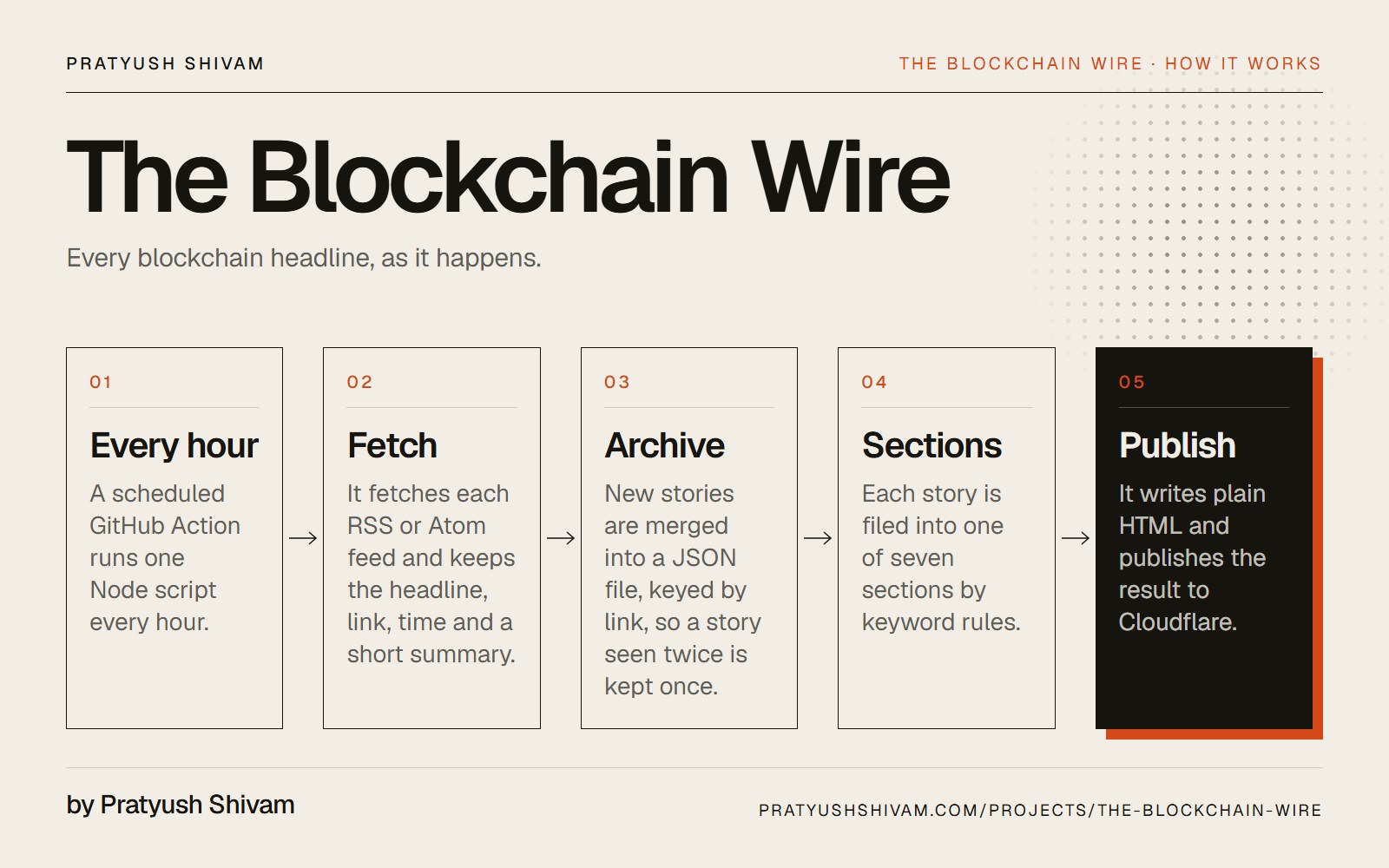
The whole site is one Node script with no dependencies. A scheduled GitHub Action runs it every hour. It fetches each RSS or Atom feed on the list with a 20 second timeout, so one slow outlet cannot hold up the rest, and keeps only the headline, link, time and a short summary. It then writes plain HTML: a front page, a page per section, the editor's pieces, an RSS feed and a sitemap, and publishes the result to Cloudflare.
02 · How it works
An archive kept in the repository
New stories are merged into a JSON file in the repository, keyed by link, so a story seen twice is kept once. Anything older than 45 days, or dated more than an hour in the future, is dropped, and the archive is capped at 1,500 stories. The Action commits the updated file back on each run. If every feed failed and there are no stories at all, the build refuses to publish an empty wire.
03 · How it works
Sections by keyword rules
Each story is filed into one of seven sections by keyword rules, checked top to bottom with the first match winning: Regulation, Enterprise, Bitcoin, Ethereum, DeFi, Markets, and Industry for everything else. Because Regulation is checked first, a story about a court case over a stablecoin lands there and not in DeFi. I kept the rules simple on purpose, and the site says plainly that a few stories will land in the wrong section.
04 · How it works
Linking, not copying
The wire never copies a full story. Summaries are clipped to about 170 characters at a word boundary, and dropped when they only repeat the headline. Tracking parameters such as utm tags and fbclid are stripped from every link, and every link points straight to the outlet. On the page, a small script turns times into minutes ago and filters the wire by section or search term, and the page still works without it.
05 · How it works
Written pieces, clearly marked
The pieces I write are plain Markdown files with a title, date and summary at the top. The build turns each into a page with article structured data and lists it in the RSS feed, always marked From the editor, so a reader can tell written from gathered. Nothing on the wire itself is picked or ranked by hand: stories are sorted by the time their publisher gave them.
06 · What it teaches
The idea underneath
The Blockchain Wire shows how little a news site needs. RSS and Atom feeds still carry most of what publishers release, a scheduled job can stand in for a server, and static files cost nothing to host. It also shows the honest limit of automatic filing: keyword rules are fast and easy to read, but they misfile some stories.
How it works, in one picture
How The Blockchain Wire works
Every hour → Fetch → Archive → Sections → Publish. Open the picture to read it at full size.
1600 × 1000 · JPEG
Questions about The Blockchain Wire
01
Which outlets does The Blockchain Wire read?
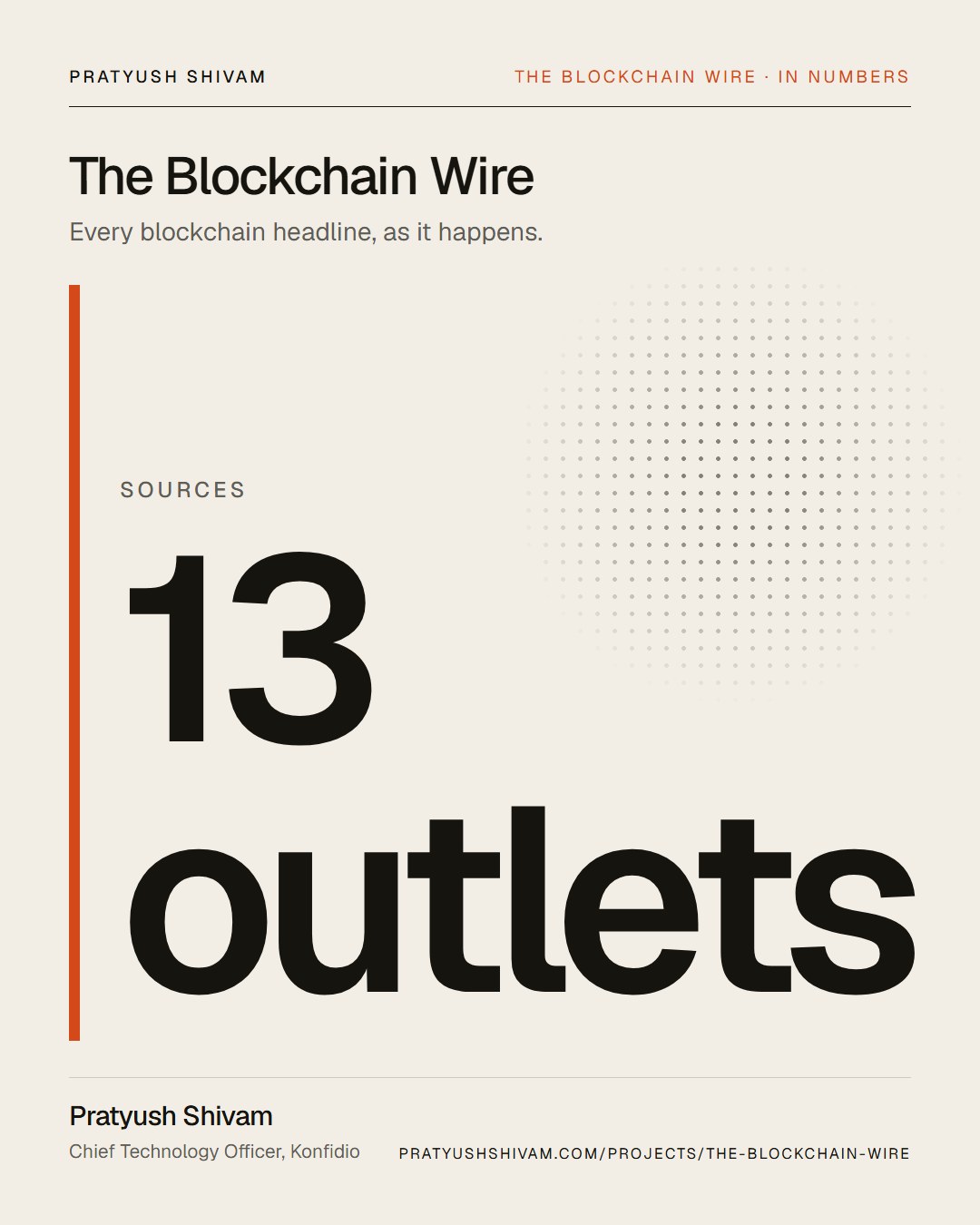
Thirteen: CoinDesk, Cointelegraph, Decrypt, The Block, Blockworks, Bitcoin Magazine, The Defiant, DL News, CryptoSlate, Protos, Ledger Insights, Unchained and the Ethereum Foundation blog. Every story links back to the outlet that reported it.
02
How often is The Blockchain Wire updated?
Every hour. A scheduled GitHub Action reads all the feeds, merges new stories into the archive and publishes the rebuilt site. The page shows when it was last updated and how many stories and sources are live.
03
Are the stories picked or ranked by hand?
No. Stories are sorted by the time their publisher gave them and filed into sections by keyword rules. Pieces written by the editor are kept separate and are always labelled From the editor.
In numbers
Sources13 outlets
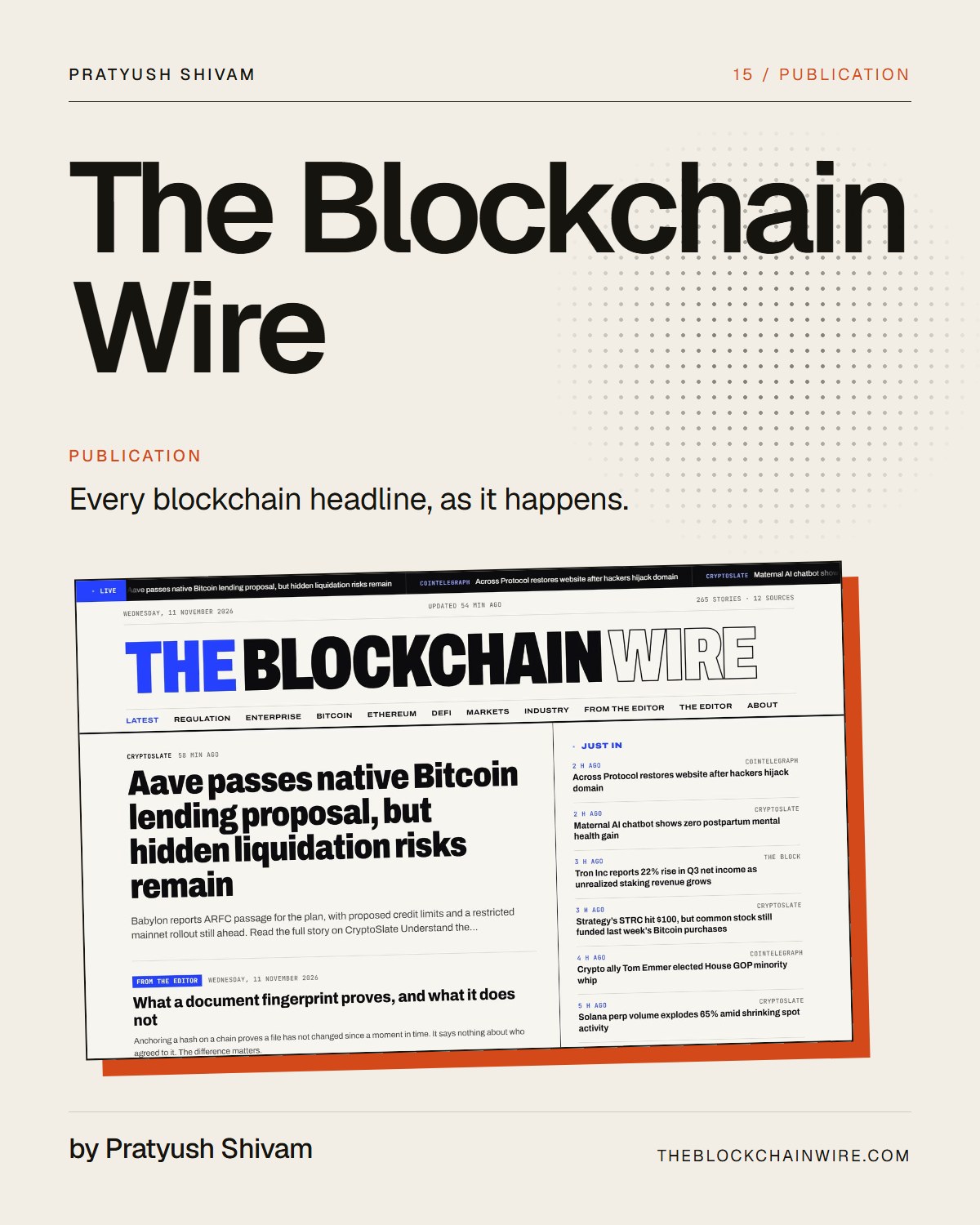
Poster
The Blockchain Wire poster
The Blockchain Wire on one sheet: a screen from it, its name and what it is. Free to use in pieces about the project, with a credit to Pratyush Shivam.